
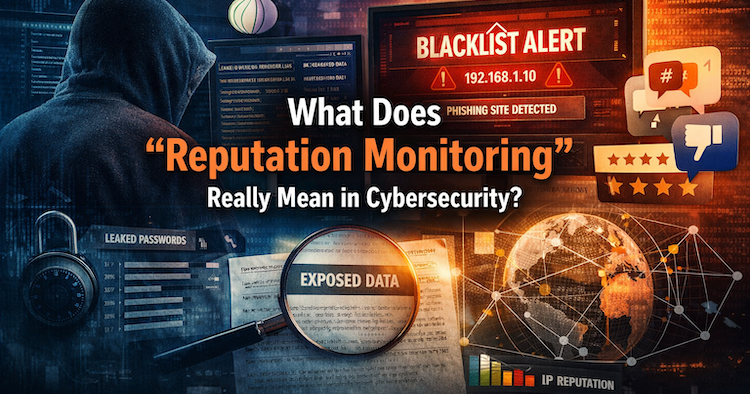
What does reputation monitoring mean in cyber security?
In cybersecurity, “reputation monitoring” is one of the most overloaded terms in the industry.
Depending on who you ask, it can mean tracking stolen credentials on the dark web, checking whether IPs or domains are blacklisted, monitoring brand mentions on social media, or some vague combination of all three. This ambiguity causes confusion for buyers and can lead to unrealistic expectations about what a security provider is actually monitoring.
In this article, we’ll disambiguate the common meanings of reputation monitoring, explain how the terms are used across the industry, and clarify what reputation monitoring means in the context of Network Box USA.
Why the Term “Reputation Monitoring” Is Confusing
The problem is simple: different industries use the same term to describe very different activities.
Marketing teams, PR platforms, and cybersecurity vendors all talk about “reputation,” but they are not talking about the same thing. To make this clear, it helps to break the term into its three most common interpretations.
Dark Web Monitoring (Exposure Detection)
What it means: Dark web monitoring focuses on identifying stolen data after a compromise has occurred. This can include credential dumps (usernames and passwords), leaked databases, ransomware leak sites, and mentions of a company in breach-related forums or marketplaces.
What question it answers: “Has our data already been stolen or exposed?”
Key characteristic: This is post-compromise intelligence, not prevention.
Dark web monitoring is sometimes mislabeled as “reputation monitoring” because it relates to how an organization appears in breach data, but in reality it is about exposure awareness, not public perception.
Infrastructure Reputation & Blacklist Monitoring (Technical Reputation)
What it means: This form of reputation monitoring tracks how an organization’s technical infrastructure is classified across global security ecosystems.
It typically includes IP reputation and blacklist status, domain reputation, email sender reputation, and malware, phishing, or abuse classifications.
What question it answers: “Are our IPs or domains being flagged as malicious or untrustworthy?”
Why this matters:
- Blacklisted infrastructure can break email delivery.
- Domains can be blocked by security tools.
- It may indicate compromise, abuse, or misconfiguration.
This is technical reputation, not brand sentiment. It reflects how automated security systems evaluate infrastructure, not what humans think about a company.
Brand / PR Reputation Monitoring (Non-Security)
What it means: This version of reputation monitoring focuses on public perception, including social media mentions, online reviews, news articles and blogs, and sentiment analysis.
What question it answers: “What are people saying about us online?”
This can be valuable for marketing and communications teams, but it is not a cybersecurity control and does not detect technical threats, compromise, or infrastructure abuse.
How Network Box USA Uses These Terms
When Network Box USA refers to reputation monitoring, it is not referring to PR or social sentiment tracking.
Instead, the focus is on security-relevant reputation signals, specifically:
Dark Web Exposure Monitoring
- Identifying leaked credentials and breach data
- Monitoring known ransomware and leak sources
- Alerting on confirmed exposure events
Infrastructure Reputation & Blacklist Monitoring
- Continuous checks of IP and domain reputation
- Monitoring blacklist and abuse classifications
- Detecting signals that infrastructure is being misused or flagged
Together, these capabilities provide visibility into exposure and infrastructure trust, which are critical inputs for incident response and security operations.
A Clearer Way to Say It
Because the term “reputation monitoring” is so overloaded, clarity matters. A more accurate description of these capabilities is:
Dark Web Exposure & Infrastructure Reputation Monitoring
Or, in plain language:
Network Box USA monitors dark-web data leaks and tracks IP, domain, and email sender reputation to detect exposure, abuse, or blacklisting.
This phrasing avoids ambiguity while accurately describing what is being monitored and why it matters.
Why Precision Matters in Cybersecurity Language
Clear terminology builds trust with technical buyers, prevents misunderstandings during incident response, and ensures customers know exactly what is and is not being monitored.
In cybersecurity, precision is not marketing polish, it’s operational honesty.
If you ever want clarification on how a security term is being used, feel free to ask us.