
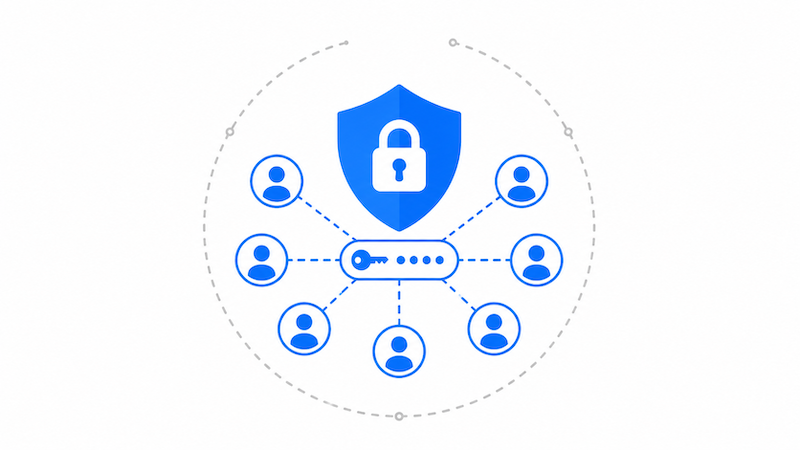
Password spraying is one of the most successful cyberattack techniques because it targets people rather than software vulnerabilities. Instead of attempting thousands of passwords against a single account, attackers try a small number of commonly used passwords across many accounts, allowing them to avoid account lockouts while increasing the chance of finding a valid login.
Organizations often focus on malware, ransomware, or zero-day vulnerabilities, yet password spraying continues to be used by ransomware operators, nation-state groups, and financially motivated attackers because it is inexpensive, difficult to distinguish from normal login activity, and frequently successful against organizations without strong authentication controls.
For businesses, MSPs, and IT administrators, preventing password spraying requires more than strong passwords. It depends on layered identity security, exposure reduction, centralized monitoring, and rapid investigation of authentication anomalies.
What Is a Password Spraying Attack?
Password spraying is an authentication attack where an attacker attempts one or a small number of common passwords against a large number of user accounts.
Unlike a traditional brute-force attack, which repeatedly targets one account until it locks, password spraying intentionally stays below account lockout thresholds.
For example, instead of trying 10,000 passwords against one employee, an attacker may attempt:
- Spring2026!
- CompanyName123
- Welcome1!
- Password123!
across hundreds or thousands of accounts.
If even one employee uses one of those passwords, the attacker gains legitimate access without exploiting any software vulnerability.
Why Password Spraying Is So Effective
Password spraying succeeds because many organizations still rely primarily on passwords for authentication, and users frequently choose predictable variations based on seasons, company names, or common words.
Attackers also benefit from:
- Public employee directories.
- LinkedIn and company websites.
- Email address harvesting.
- Cloud services exposed to the internet.
- VPN login portals.
- Remote Desktop gateways.
- Microsoft 365 and Google Workspace authentication endpoints.
Because each account receives very few login attempts, many security systems treat the activity as ordinary authentication failures rather than an active attack.
Signs Your Organization May Be Experiencing Password Spraying
- Large numbers of failed logins across many different users.
- Authentication attempts from unfamiliar countries.
- Repeated failures using legacy authentication protocols.
- Login attempts occurring outside business hours.
- Multiple accounts receiving identical failure patterns.
- Successful login immediately following numerous failed attempts.
- Unexpected MFA prompts reported by users.
How to Prevent Password Spraying
Require Multi-Factor Authentication
MFA significantly reduces the likelihood that a stolen password alone can compromise an account. Modern phishing-resistant MFA methods provide stronger protection than SMS-based authentication where supported.
Disable Legacy Authentication
Older authentication protocols frequently bypass modern security protections and should be disabled whenever operationally possible.
Use Strong Password Policies
Organizations should discourage predictable seasonal passwords and require unique credentials that are not reused across services.
Restrict Public Login Exposure
Administrative portals, VPN gateways, remote desktop services, and cloud authentication endpoints should be protected using conditional access, IP restrictions, VPNs, Zero Trust access policies, or other appropriate controls.
Monitor Authentication Logs
Failed logins across multiple users often provide the earliest indication of password spraying. Centralized monitoring makes these patterns much easier to identify.
Train Employees
Employees should understand why password reuse, predictable passwords, and approving unexpected MFA requests create unnecessary risk.
What MSPs Should Look For
MSPs should review client environments for:
- Internet-exposed authentication portals.
- Disabled or optional MFA.
- Legacy authentication.
- Weak password policies.
- Missing centralized log collection.
- Unmonitored authentication failures.
- Inactive accounts that remain enabled.
Password spraying often succeeds because small configuration weaknesses accumulate over time rather than because of a single critical vulnerability.
Questions to Ask Your Security Provider
- Can authentication events be centrally monitored?
- Can suspicious login patterns generate alerts?
- Can impossible travel and abnormal login behavior be detected?
- Can compromised accounts be isolated quickly?
- Can failed authentication activity be correlated across multiple systems?
Layered Identity Security Matters
Password spraying demonstrates why identity has become one of today's most important attack surfaces. Strong passwords remain valuable, but organizations also need MFA, centralized monitoring, exposure reduction, authentication visibility, and rapid incident response.
Network Box USA provides NBX MDR, SIEM, and SOC services, managed Unified Threat Management, Secure Web Gateway, and guidance for implementing Multi-Factor Authentication. Together, these services help organizations improve visibility into authentication activity, reduce internet exposure, and investigate suspicious login behavior before attackers establish persistence.